
Frequently Bought Together
Description
Book Overview
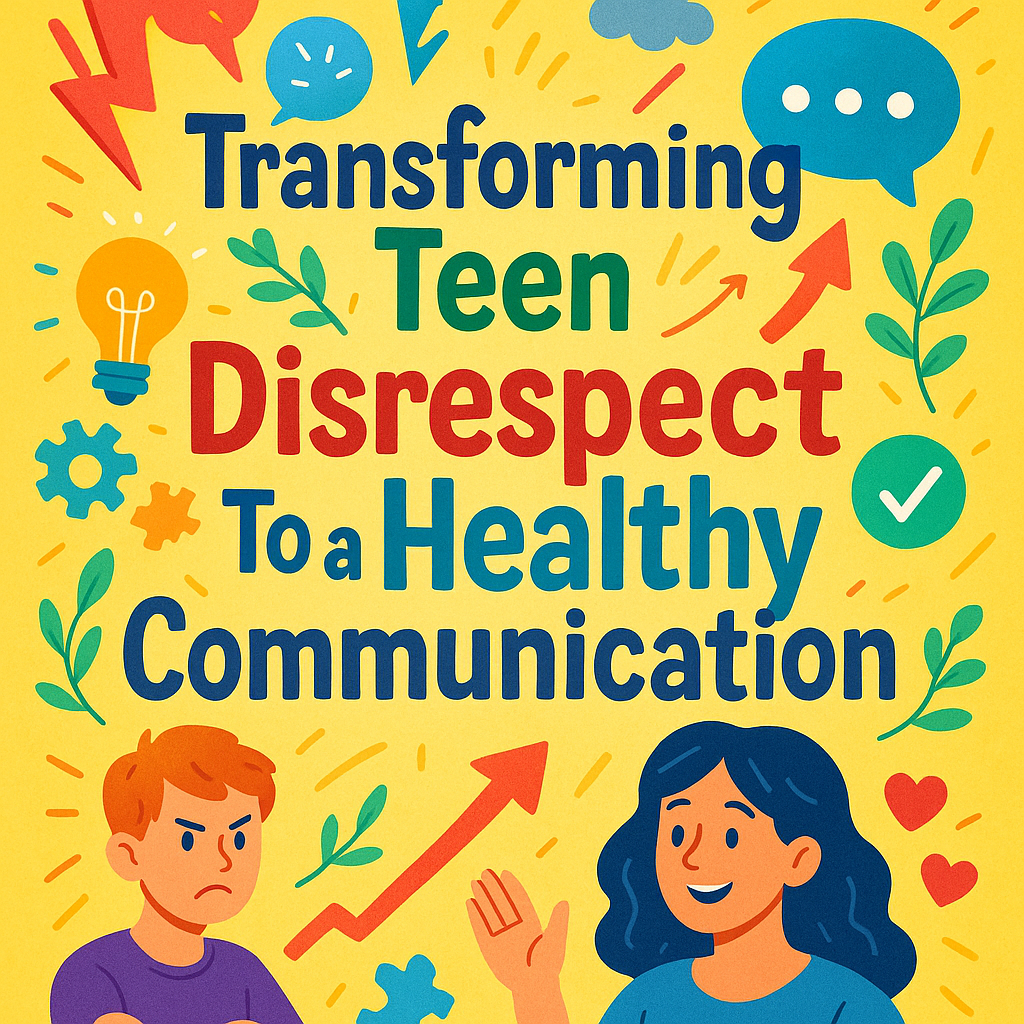
Transforming Teen Disrespect into Healthy Communication offers a practical, evidence-informed pathway for adults to shift disruptive exchanges with teens into constructive conversations. Drawing on communication theory, developmental psychology, family systems, and restorative approaches, the book equips readers with a clear framework for understanding why disrespect emerges, how its signals differ from intent, and what strategies reliably cultivate safer, more open dialogue. The target readership is broad: parents, guardians, educators, mentors, youth workers, counselors, and any adult seeking to guide adolescents toward autonomy, responsibility, and healthier relationships. The book emphasizes self-directed learning—readers engage with concepts, reflect on personal experiences, analyze case studies, and practice actionable techniques in their own contexts. By balancing accessible explanations with rigorous insights, the text helps readers build transferable skills: listening with empathy, setting durable boundaries, reframing interactions, and sustaining change across home, school, and community settings. The ultimate aim is not merely to reduce hostility in conversations with teens but to nurture resilience, mutual respect, and lasting communication habits that teens can carry into adulthood.
Core Concepts
- Respectful Communication as a Skillful Practice: A deliberate, lifelong set of behaviors—listening, clarity of intent, nonjudgmental language, and timely repair—that can be learned and improved through deliberate practice. It is not a mood or a momentary tone but a structured approach that supports autonomy and safety for both sides. Self-check: Do my chosen words and timing align with my goal of connection rather than dominance?
- Disrespect as Signals, Not Intent: Disrespect often conveys frustration, boundary testing, or unmet needs more than a personal insult. Recognizing signals (tone, sarcasm, withdrawal) helps distinguish harmful patterns from momentary lapses and guides productive responses. Self-check: Am I reacting to a signal, or assuming malice behind the teen’s behavior?
- Active Listening and Empathy: The anchor of healthy dialogue, involving attentive listening, paraphrasing, validating feelings, and accurately reflecting meaning. This practice reduces defensiveness and creates psychological safety for risk-taking in conversation. Self-check: Have I asked clarifying questions and echoed what I heard so the teen feels understood?
- Boundaries, Autonomy, and Safety: Boundaries protect emotional and physical safety while preserving teens’ sense of autonomy. Healthy boundaries are explicit, consistent, and revisited over time, not imposed as rigid rules. Self-check: Are my boundaries clearly stated, fairly applied, and open to negotiation when appropriate?
- Repair and Reconciliation: When conflict or disrespect occurs, timely repair (apology, restitution, adjustment) restores trust and reduces avoidance. Repair is an ongoing practice, not a one-time act, and it strengthens future collaboration. Self-check: Have I acknowledged impact, taken responsibility, and invited the teen to participate in repair?
Book Structure
- Chapter 1: Foundations for Transforming Teen Disrespect into Healthy CommunicationINTRODUCTION CHAPTER: Welcome readers to the field of study and establish why this subject matters. This capstone introductory chapter defines key terminology (disrespect, autonomy, safety, repair), situates teen communication within developmental and relational contexts, and outlines the theoretical frameworks that guide the book. Readers are introduced to a historical arc—from punitive approaches to restorative, relationship-centered models—and a practical vision: move from reaction to reflection, from blame to collaboration. The chapter explains how different environments—home, school, and community—shape communication patterns and why a consistent, theory-informed approach yields durable change. It also presents a road map for independent study, including case-study analyses, reflective prompts, and self-guided practice exercises that bridge theory to real-world scenarios.
- Chapter 2: Understanding Teen Disrespect: Causes, Contexts, and SignalsIn this chapter, readers examine the developmental, social, and situational factors that produce disrespectful behavior in adolescence. The discussion covers neurodevelopmental changes (emotion regulation, risk assessment, identity exploration), attachment and family dynamics, peer influence, media and cultural messaging, and school structures. We differentiate between intent and impact, clarifying how teens may use disrespect as a cue for help, a test of boundaries, or a response to perceived power imbalances. The chapter presents typologies of disrespect (verbal abrasiveness, sarcasm, overt hostility, withdrawal, and passive-aggressiveness) and maps each form to potential underlying needs (belonging, competence, autonomy, safety). Case vignettes illustrate how similar behaviors can stem from different causes, highlighting the importance of context. Practical self-checks guide readers to pause, assess signals, and plan a proportionate response that preserves relationship trust while upholding boundaries.
- Chapter 3: From Conflict to Dialogue: Principles of Healthy CommunicationThis chapter builds a principled foundation for dialogue that reduces defensiveness and invites collaboration. Core ideas include safety before challenge (emotional and physical), goals of interaction (understanding, agreement, repair), and message design (I-statements, nonjudgmental language, clarity of intent). The chapter explores nonviolent communication as a core framework, along with alternative models such as restorative practice and collaborative problem-solving. Readers learn to articulate expectations, distinguish facts from interpretations, and set shared aims for conversations. Concrete examples show how to reframe disrespectful openings into opportunity-rich dialogue, and self-guided exercises help readers practice pre-conversation planning, named intention setting, and post-conversation reflection.
- Chapter 4: Listening and Empathy: The Heart of ConnectionListening is presented not as a passive act but as an active, relational skill. The chapter details techniques such as reflective listening (paraphrasing back what was heard), validation without agreement, and emotion labeling. It clarifies how empathy reduces defensiveness and fosters trust, enabling teens to express needs more openly. Readers encounter structured exercises to develop listening stamina, manage their own emotions during tense moments, and use validated responses to build rapport. Theoretical bases include emotion regulation within interpersonal exchanges and the role of social learning in modeling respectful communication for adolescents. The chapter also addresses cultural and individual differences in communication styles to ensure inclusive practice.
- Chapter 5: Strategies for Reframing Disrespect into Respectful InteractionThis chapter provides a toolkit of practical strategies designed to transform negative exchanges into constructive conversations. Techniques include timed pauses, I-statements, reframing criticism as feedback, and jointly reframing problems as shared challenges. A step-by-step approach—identify, pause, label emotion, state impact, request a change, and verify understanding—guides readers through real-time de-escalation. The chapter emphasizes proactive strategies (clear expectations, routines, and predictable responses) and reactive strategies (cooling-off periods, structured renegotiation) to sustain healthy dynamics. Case examples show how a single shift in phrasing can alter the trajectory of a tense exchange. Self-directed exercises invite readers to analyze past conflicts, craft alternative dialogue, and test new patterns in safe, low-stakes environments.
- Chapter 6: Tools and Techniques: Conversation Structures, Scripts, and NegotiationChapter 6 translates principles into actionable formats. It introduces conversation structures (preparation, initiation, exploration, agreement, and follow-up), simple scripts for common situations (household chores, curfews, homework, and social boundaries), and negotiation techniques that honor autonomy while maintaining safety. Readers learn to design agreements that are specific, measurable, achievable, relevant, and time-bound (SMART), and to embed repair clauses for future missteps. The chapter includes templates, role-play scenarios, and guidelines for using technology-mediated communication in a constructive way. By working through scripted interactions and then adapting them to personal contexts, readers build confidence to handle recurring disputes with teens in a fair, transparent, and collaborative manner.
- Chapter 7: Applying and Sustaining Change: Family, School, and Community ContextsThis chapter centers on translating skills into enduring practices across multiple environments. It covers family routines that reinforce healthy dialogue (regular family check-ins, shared problem-solving rituals, consistent feedback loops), school-based applications (teacher-student agreements, restorative circles, peer mediation), and community settings (youth programs, mentoring, and online conduct standards). It discusses co-creation with teens—inviting their input on norms and consequences—to increase buy-in and reduce resistance. The chapter also addresses cultural humility and equity, ensuring that approaches respect diverse familial backgrounds and teen identities. Readers learn how to evaluate progress through qualitative observations, self-assessment, and lightweight data collection (checklists, reflection logs) to adjust strategies over time.
- Chapter 8: Conclusion: Synthesis and Forward PathsCONCLUSION CHAPTER: This closing chapter synthesizes the core concepts, methods, and evidence presented throughout the book. It bridges theory and practice by revisiting the central questions: How does respectful communication transform adolescent relationships and outcomes? What practices produce durable behavioral change for both adults and teens? The chapter connects current research trajectories—neurodevelopment, adolescent autonomy, restorative justice, and family-systems theory—with practical implications for policy, program design, and personal growth. It offers a forward-looking agenda for readers, encouraging ongoing reflection, adaptation, and experimentation in diverse contexts. The conclusion acknowledges the intellectual journey completed, highlights limitations, and outlines opportunities for further study and application in education, counseling, and community life.
Learning Approach
The book is designed for self-directed study, combining theoretical frames with applied practice. Readers engage with case studies to analyze underlying dynamics, examine tension points, and test interpretations against evidence. Each chapter includes practical exercises—case analyses, reflection prompts, and practice problems with solutions—that encourage active learning. Conceptual frameworks (models of communication, emotion regulation, and relational repair) are presented in digestible diagrams and annotated explainers, followed by step-by-step activities to implement them in real life. The approach emphasizes iterative learning: observe, practice, reflect, adjust. Self-check prompts appear throughout, guiding readers to assess their assumptions, measure progress, and decide when to seek additional resources or support. This structure supports independent learners in building a dependable toolkit for transforming disrespect into productive, respectful dialogue in academic, professional, and personal contexts.
Key Takeaways
After reading this book, readers will be able to: – Define disrespect in teens as a signal of needs or boundaries, not a personal attack, and respond with curiosity rather than reflexivity. – Describe and apply a framework for healthy communication that prioritizes safety, clarity, and repair. – Employ active listening, empathetic validation, and reflective paraphrasing to reduce defensiveness and invite collaboration. – Establish durable boundaries that are explicit, consistent, and negotiable, preserving teen autonomy while maintaining safety. – Use structured conversation tools, scripts, and negotiation techniques to plan and conduct effective discussions with teens. – Implement case-based strategies in family, school, and community settings to sustain positive changes over time. – Design and evaluate repair processes after conflict to rebuild trust and reinforce future cooperation. – Integrate theory and practice through ongoing reflection, case analysis, and deliberate experimentation in real-world contexts. – Seek inclusive, culturally responsive approaches that honor diverse teen experiences and backgrounds. – Translate insights into actionable routines—check-ins, agreements, and follow-up practices—that become part of daily life.
Target Application
The knowledge and skills in this book are applicable across multiple domains. In academic settings, educators and counselors can use the models to design classroom norms, restorative circles, and mentoring programs that support respectful engagement and emotional safety. In professional contexts, youth workers, social workers, and human resources personnel can apply the conversation structures and boundary-setting frameworks to improve interactions with adolescents and young adults, reduce conflict, and foster environments conducive to learning and well-being. In personal life, parents and guardians gain practical tools for guiding teens through autonomy development, conflict resolution, and effective problem-solving. Practical exercises include: (1) developing a personal “dialogue playbook” for common teen scenarios, (2) conducting self-assessments of communication style and trigger patterns, (3) analyzing a real-life conflict with the provided framework, identifying the signals, and proposing an improvement plan, (4) designing a family or classroom agreement that incorporates repair clauses, and (5) tracking progress through reflection journals and brief progress reports. By applying the concepts to concrete situations, readers build confidence to facilitate healthier relationships and outcomes in academic, professional, and personal spheres.





Reviews
There are no reviews yet.