
Frequently Bought Together
Description
Course Overview
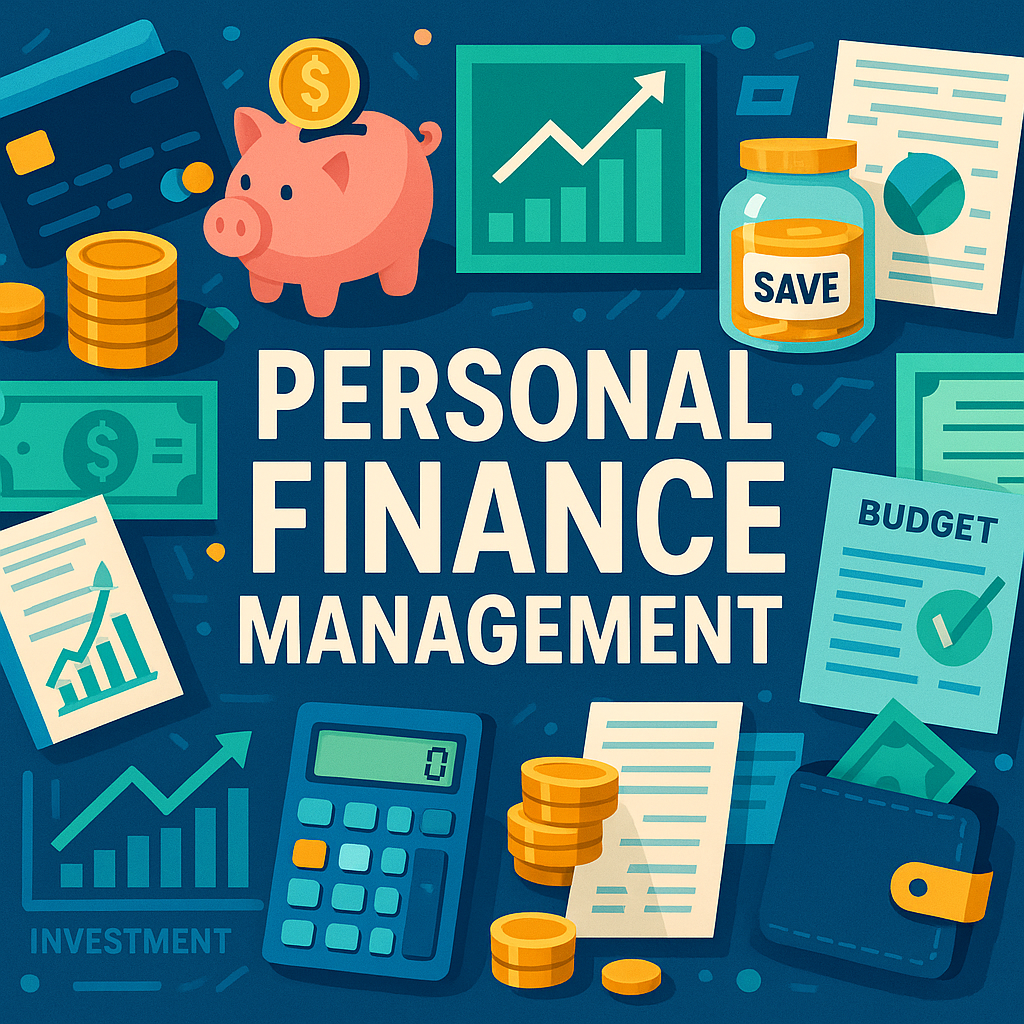
This course, “Building Your Financial Future: A Comprehensive Course on Personal Finance Management,” is designed to empower individuals with the knowledge and skills necessary to manage their personal finances effectively. Understanding personal finance is crucial in today’s complex economic landscape. This course will cover essential topics such as budgeting, saving, investing, debt management, and retirement planning. By engaging with real-life examples and practical exercises, learners will gain insights into making informed financial decisions that can lead to long-term financial stability and growth.
Learning Objectives
Analyze personal financial situations to create comprehensive budgets that reflect individual goals. Evaluate various saving and investment options to develop an effective financial growth strategy. Apply debt management techniques to reduce liabilities and enhance credit scores. Construct a personalized retirement plan that aligns with lifestyle aspirations and financial realities. Utilize financial tools and resources to track and optimize personal financial health.
Prerequisites
Students should have a foundational understanding of basic financial concepts such as income, expenses, and savings. Familiarity with simple mathematical operations will be beneficial. No prior advanced finance knowledge is required, but a willingness to engage with personal finance topics and scenarios is essential.
Course Structure
1. Chapter 1: Introduction to Personal Finance
This chapter introduces the fundamental concepts of personal finance, exploring the importance of financial literacy. Students will discover the course layout, key terms, and the relevance of managing personal finances in achieving life goals.
2. Chapter 2: Budgeting Basics
Students will learn how to create and maintain a budget. This chapter covers income tracking, expense categorization, and financial goal setting. Practical tools for budgeting will also be introduced.
3. Chapter 3: Effective Saving Strategies
Focusing on the importance of saving, learners will explore various saving methods, including emergency funds and high-yield savings accounts. Students will create a tailored savings plan
based on their financial goals.
4. Chapter 4: Understanding Credit
This chapter dives into credit scores, reports, and their significance. Students will learn how to assess their credit standing and strategies to improve their credit scores over time.
5. Chapter 5: Debt Management Techniques
Students will explore different types of debt and effective strategies for managing it. This includes debt repayment plans, consolidation options, and avoiding common pitfalls.
6. Chapter 6: Investing Fundamentals
This chapter introduces concepts of investing, including stocks, bonds, and mutual funds. Students will learn about risk assessment and how to build a diversified investment portfolio.
7. Chapter 7: Retirement Planning Essentials
Students will examine various retirement accounts and the importance of early planning. This chapter will help learners create a personalized retirement strategy based on their desired lifestyle.
8. Chapter 8: Tax Basics
This chapter provides an overview of personal taxation, including income tax, deductions, and credits. Students will learn how to optimize their tax situation while remaining compliant.
9. Chapter 9: Insurance Fundamentals
Students will explore various types of insurance (health, life, auto) and their role in financial planning. This chapter emphasizes the necessity of adequate coverage for financial security.
10. Chapter 10: Planning for Major Life Events
This chapter discusses financial planning for significant life events such as marriage, parenthood, and home buying. Students will learn to anticipate expenses and build budgets for these transitions.
11. Chapter 11: Building Wealth Over Time
Students will learn strategies for wealth accumulation, including long-term investments and passive income streams. This chapter encourages a mindset for sustained financial growth.
12. Chapter 12: Navigating Economic Changes
This chapter examines how economic fluctuations impact personal finance. Students will learn to adapt their financial strategies in response to changing economic conditions.
13. Chapter 13: Financial Tools and Resources
Students will discover various financial apps and resources available for budgeting, investing, and tracking expenses. This chapter emphasizes the importance of utilizing technology in personal finance.
14. Chapter 14: The Psychology of Money
This chapter explores the emotional aspects of financial decision-making. Students will learn about common biases and how to cultivate a healthy relationship with money.
15. Chapter 15: Charitable Giving and Financial Responsibility
Students will discuss the importance of philanthropy in personal finance. This chapter covers budgeting for charitable contributions and the impact of giving on financial well-being.
16. Chapter 16: Financial Independence and Early Retirement
This chapter introduces the concepts of financial independence and the strategies to achieve early retirement. Students will learn about frugality, investment growth, and lifestyle choices.
17. Chapter 17: Creating a Financial Plan
Students will synthesize their learning by creating a comprehensive financial plan. This chapter guides learners through setting actionable goals and outlining steps to achieve them.
18. Chapter 18: Reviewing and Adjusting Your Financial Plan
This chapter emphasizes the importance of regular financial reviews. Students will learn how to assess their financial progress and make necessary adjustments to stay on track.
19. Chapter 19: Preparing for Financial Challenges
Students will explore potential financial challenges and how to prepare for them. This includes understanding risks and developing contingency plans for unexpected events.
20. Chapter 20: Conclusion and Next Steps In this final chapter, students will review key concepts learned throughout the course. They will be encouraged to continue their financial education and apply their insights in real-world scenarios.
Learning Delivery Methods
Content will be delivered through engaging video lessons, interactive quizzes, and practical exercises. Learners will have access to downloadable resources such as budgeting templates and investment calculators. Self-assessment tools will help track progress and understanding, ensuring a thorough grasp of personal finance principles.
Assessment & Practice
Students will demonstrate their learning through automated quizzes at the end of each chapter, self-check exercises, and practical assignments that encourage real-world application. Reflection prompts will guide learners in assessing their financial beliefs and practices, while progress tracking features will allow them to monitor their journey through the course.
Expected Outcomes
By the end of the course, learners can confidently manage their personal finances, create effective budgets, make informed investment decisions, and plan for their financial futures. They will be equipped with actionable skills to navigate the complexities of personal finance independently.







Reviews
There are no reviews yet.