
Frequently Bought Together
Description
Course Overview
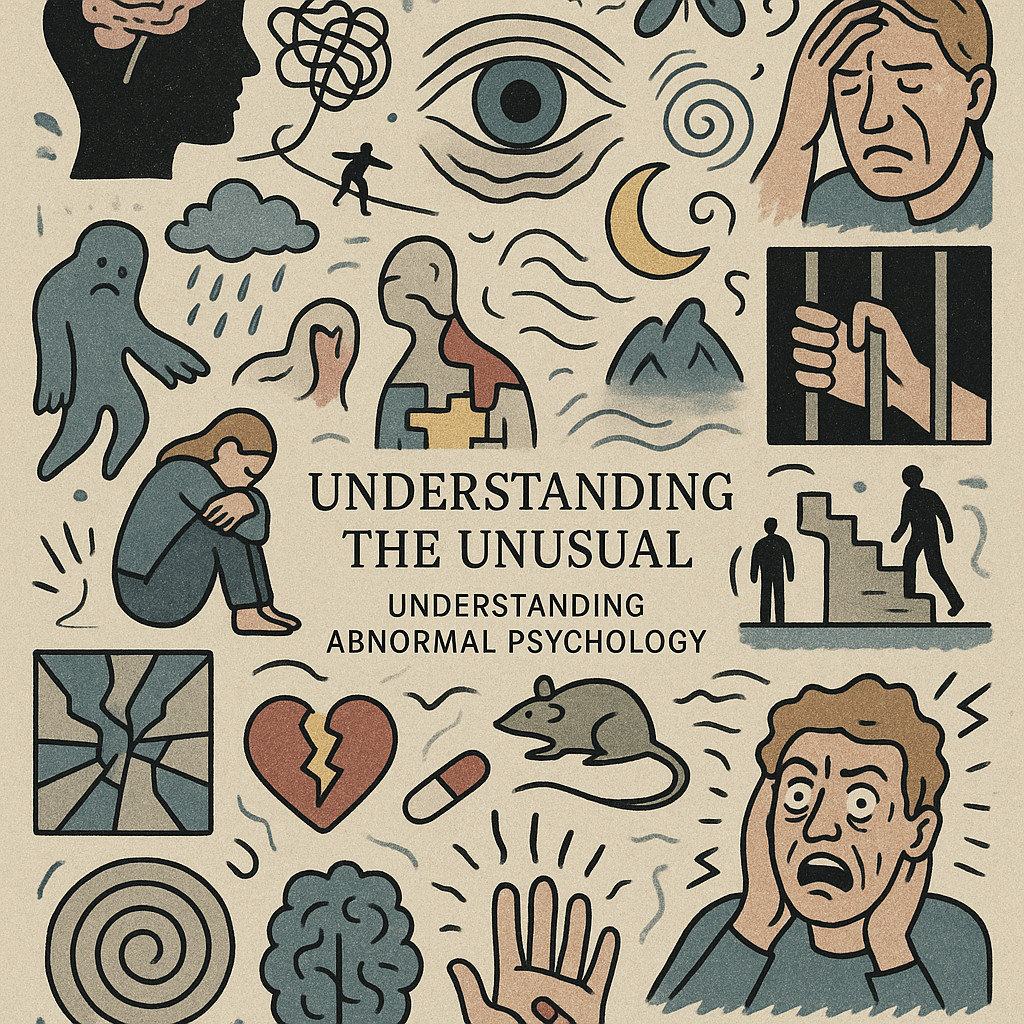
Understanding the Unusual: A Conversational Introduction to Abnormal Psychology is designed for complete beginners who want to grasp the basics of mental health in a clear, friendly, and practical way. The course invites you to explore what psychologists mean by “abnormal,” how distress and impairment are identified, and why cultural context matters when interpreting behavior. You’ll learn through a casual, supportive voice that uses relatable examples, simple definitions, and progressive steps—from foundational concepts to applied thinking. Delivered entirely online and self-paced, the course combines short video lessons, interactive activities, downloadable glossaries, and reflective prompts to help you build mental health literacy at your own speed. By focusing on ethics, evidence, and inclusive language, you’ll develop a balanced, curious approach to understanding unusual behavior in everyday life.
Learning Objectives
- Define and explain standard terms used in abnormal psychology (e.g., abnormality, distress, impairment) using plain language and simple examples.
- Describe major historical and theoretical perspectives that shape how abnormal behavior is understood (e.g., early demonology, moral treatment, psychodynamic ideas, behaviorism, biomedical models).
- Identify criteria used to assess abnormality (statistical deviation, distress, impairment, danger, cultural norms) and explain their limitations and cultural considerations.
- Apply core concepts to basic case vignettes to interpret patterns of thinking, feeling, and behaving, and propose initial supportive responses.
- Evaluate different treatment approaches for common disorders using evidence-based criteria, including when certain approaches may be appropriate and how outcomes are interpreted.
Prerequisites
No formal prerequisites are required. The course is designed for beginners and uses plain language with gradual progression. Basic reading proficiency, access to the internet, and a willingness to engage with new ideas are recommended to maximize learning. You do not need prior psychology coursework; you will build foundational knowledge from the ground up and have opportunities to practice with accessible examples and self-checks.
Course Structure
- Chapter 1: Introduction to Abnormal Psychology Welcoming introduction to the subject, this chapter defines abnormal psychology, explains why it matters, and lays the groundwork for a friendly, nonjudgmental exploration. You will learn key terms such as distress, impairment, and cultural norm, see how everyday experiences can differ from clinically significant concerns, and familiarize yourself with the course’s self-paced format. By the end, you’ll be able to articulate what this field studies, distinguish normal variation from potential concerns, and identify questions you want to explore further. Learning activities include a short video overview, a glossary, and a few reflective prompts to connect concepts to your own experiences.
- Chapter 2: Historical Perspectives on Abnormal Behavior This chapter traces how interpretations of abnormal behavior have evolved—from ancient theories to modern frameworks. You’ll encounter brief, approachable explanations of demonology, moral treatment, psychoanalysis, behaviorism, and contemporary biomedical models. The goal is to show how cultural context shapes ideas about what is “abnormal” and how treatments have shifted over time. By the end, you should be able to summarize major historical milestones, compare at least two perspectives, and explain why history matters when assessing current concepts in abnormal psychology. Activities include a timeline activity and a reflection on how beliefs influence judgments about mental health.
- Chapter 3: Defining Abnormality: Criteria, Methods, Debates. Abnormality is not a single, simple label. This chapter outlines criteria such as distress, impairment, statistical rarity, and danger, and discusses how culture, context, and personal experiences influence these criteria. You’ll explore the debates and limitations of each criterion and examine how clinicians balance multiple factors when evaluating someone’s mental health. By the end, you’ll be able to describe standard criteria, identify potential biases in assessment, and explain why context matters in defining abnormality. Practice tasks include analyzing sample scenarios for distress and impairment and identifying which criteria apply.
- Chapter 4: The Biopsychosocial Model in Everyday Life The biopsychosocial model explains mental health through biological, psychological, and social factors. This chapter helps you see how genetics, brain function, thoughts, emotions, relationships, culture, and life events all interact to influence behavior and well-being. You’ll learn to recognize how each domain contributes to a person’s experiences and how practitioners integrate these factors when assessing concerns. By the end, you should be able to map a hypothetical scenario across the three domains, discuss potential influences, and articulate why a holistic view is essential to understanding mental health. Activities include a guided scenario-mapping exercise and a printable model diagram.
- Chapter 5: Mood Disorders: Depression and Bipolar Disorder In this chapter, you’ll explore mood-related patterns such as persistent sadness, loss of interest, energy changes, sleep disturbances, and mood swings. You’ll distinguish between unipolar depression and bipolar disorder, learn common warning signs, and understand how mood disorders affect daily functioning. Real-life examples illustrate how symptoms manifest across individuals and contexts. By the end, you should be able to describe core features, recognize signs in vignettes, and discuss non-technical ways to support someone experiencing mood difficulties. Activities include symptom checklists and a short reflective exercise on stigma and language.
- Chapter 6: Anxiety and Related Disorders. This chapter covers general anxiety, panic, phobias, social anxiety, and related concerns. You’ll learn how anxiety presents physically and emotionally, why it can become problematic when it interferes with daily life, and how avoidance, worry, and physiological responses influence experience. You’ll also explore common coping strategies and the idea of adaptive versus maladaptive anxiety. By the end, you should be able to identify anxiety patterns in case vignettes, explain how anxiety differs from everyday stress, and describe initial self-help and support options. Activities include scenario analyses and practice questions.
- Chapter 7: Psychotic Disorders and Reality Perception. This chapter introduces experiences such as unusual beliefs, delusions, perceptual changes, and disorganized thinking that may occur in certain conditions. You’ll learn how clinicians distinguish between different causes of psychotic-like symptoms and why early understanding, compassionate communication, and appropriate referral matter. The goal is to demystify psychosis and emphasize respectful language. By the end, you should be able to explain basic symptoms, discuss how these experiences can affect functioning, and outline safe, supportive steps in conversations or outreach. Activities include a simple symptom catalog and a reflection on how to respond empathetically.
- Chapter 8: Neurodevelopmental Disorders. This chapter covers conditions such as autism spectrum disorders and attention-deficit/hyperactivity disorder (ADHD) that emerge in childhood and influence development. You’ll learn common characteristics, challenges in daily life, and how supports and accommodations help people thrive. Practical examples illustrate how neurodevelopmental differences manifest in school, work, and relationships. By the end, you should be able to describe core features, discuss early signs in a development context, and suggest inclusive strategies that support learning and participation. Activities include an age-based scenario exercise and a glossary of key terms.
- Chapter 9: Substance-Related and Addictive Disorders. Substance use and addictive patterns involve biological, psychological, and social dimensions. This chapter outlines how substances affect mood, thinking, behavior, and functioning, and it discusses common risk factors and recovery concepts. You’ll learn terminology that reduces stigma and understand why treatment often uses a combination of behavioral strategies, support networks, and, when appropriate, medical supervision. By the end, you should be able to identify signs of problematic use in examples, describe general treatment approaches, and articulate why a nonjudgmental stance matters. Activities include case vignettes and a brief self-assessment exercise on readiness to seek help.
- Chapter 10: Personality and Identity Across Disorders. This chapter provides an approachable overview of personality patterns and how identity, temperament, and coping styles can influence mental health. You’ll learn about common personality-related concerns and how they interact with life events and relationships. The aim is to demystify terminology and keep discussions respectful and evidence-informed. By the end, you should be able to describe basic concepts of personality frameworks, discuss how identity can shape mental health experiences, and summarize how clinicians consider personality in assessment and care. Activities include concise case summaries and a terminology cheat sheet.
- Chapter 11: Assessment Basics: How Clinicians Understand Minds. Assessment is the process of gathering information to understand a person’s mental health. This chapter explains interviews, behavioral observations, and standard screening tools, highlighting how reliability and validity contribute to the trustworthiness of conclusions. You’ll learn about ethics, confidentiality, and the importance of culturally sensitive practice. By the end, you should be able to outline common assessment steps, recognize the core differences between screening and diagnosis, and explain why accurate assessment is essential for appropriate support. Activities include a simplified mock-interview workflow and a checklist for evaluating assessment questions.
- Chapter 12: Therapeutic Approaches: Evidence, Options, and Decisions. Here you’ll survey major therapeutic approaches, including cognitive-behavioral strategies, mindfulness- and acceptance-based therapies, and supportive counseling. You’ll also encounter a brief look at pharmacotherapy’s role in some cases, and you’ll learn how clinicians choose among options based on symptoms, preferences, and evidence. The emphasis is on understanding core principles in plain language and recognizing that adequate care is personalized. By the end, you should be able to describe at least two treatment approaches, discuss their basic mechanisms, and explain how to have informed conversations about care. Activities include comparison charts and reflection prompts on choosing approaches that feel right for you or a hypothetical client.
- Chapter 13: Case Studies, Ethics, and Responsible Practice. Case studies bring theory to life. This chapter covers how to read and learn from vignettes while respecting privacy, consent, and safety. You’ll learn basic ethical concepts such as confidentiality, informed consent, and risk assessment, and you’ll practice discussing cases in a respectful, nonjudgmental way. By the end, you should be able to identify key ethical considerations in mental health discussions, outline a basic response plan for a hypothetical case, and articulate how ethics guide everyday practice. Activities include ethics prompts and simple case analyses that reinforce responsible reasoning.
- Chapter 14: Self-Reflection, Bias, and Healthy Learning Habits. Learning about abnormal psychology involves examining our own beliefs and biases. This chapter invites self-reflection about personal experiences, cultural background, and preconceived notions. You’ll explore strategies to minimize bias, engage with complex topics respectfully, and maintain healthy study habits that support long-term learning. By the end, you should be able to articulate personal biases, describe approaches to counter them in discussion and research, and outline routines that promote thoughtful, evidence-based thinking. Activities include guided reflection prompts and a practical study plan template.
- Chapter 15: Conclusion and Next Steps. This final chapter reviews the core concepts covered, highlights how to apply what you’ve learned in real life, and points to pathways for continued learning. You’ll see real-world applications, such as talking about mental health with friends, colleagues, or family, and recognizing when to seek help. The chapter concludes with encouragement and concrete next steps, including suggested readings, reputable self-help resources, and ideas for continuing your journey into psychological thought thoughtfully and ethically. Celebrate your progress and plan your next learning steps with confidence.
Learning Delivery Methods
The course is delivered entirely online and designed for asynchronous, self-paced study. Expect concise, friendly video lessons that introduce each concept in plain language, followed by interactive exercises that reinforce understanding. You’ll access downloadable resources such as glossaries and quick-reference sheets, engage with practice activities that apply ideas to real-life scenarios, and complete self-assessment tools to monitor your progress. All materials are accessible at your own pace, with optional captions, transcripts, and straightforward navigation to support learners who prefer different formats. No live sessions are required; you learn at your convenience.
Assessment & Practice
Assessments emphasize practical application and self-directed growth. Expect automated quizzes that test your recall and understanding, interactive exercises that require you to apply concepts to simple scenarios, and downloadable worksheets to practice terminology and classification. Reflection prompts encourage you to connect ideas to your own experiences, while short case-based assignments help you build skills in interpretation and communication. Progress is tracked through a learner dashboard, with immediate feedback on quizzes and annotated feedback on activities to guide further study. This approach supports steady improvement without the pressure of real-time evaluation.
Expected Outcomes
By the end of the course, you can: explain core terms and concepts in everyday language; describe major historical and theoretical perspectives on abnormal behavior; identify criteria used to assess abnormality and discuss their limitations; apply concepts to simple case vignettes to interpret patterns of thinking, feeling, and behavior; evaluate common treatment approaches using evidence-based criteria; and discuss ethical considerations and bias in mental health discussions. You will also be able to discuss mental health topics with confidence, using respectful language and supported by reliable information. These observable behaviors demonstrate your readiness to continue learning and to engage with complex psychological topics in everyday life.






Reviews
There are no reviews yet.