Frequently Bought Together
Description
Course Overview
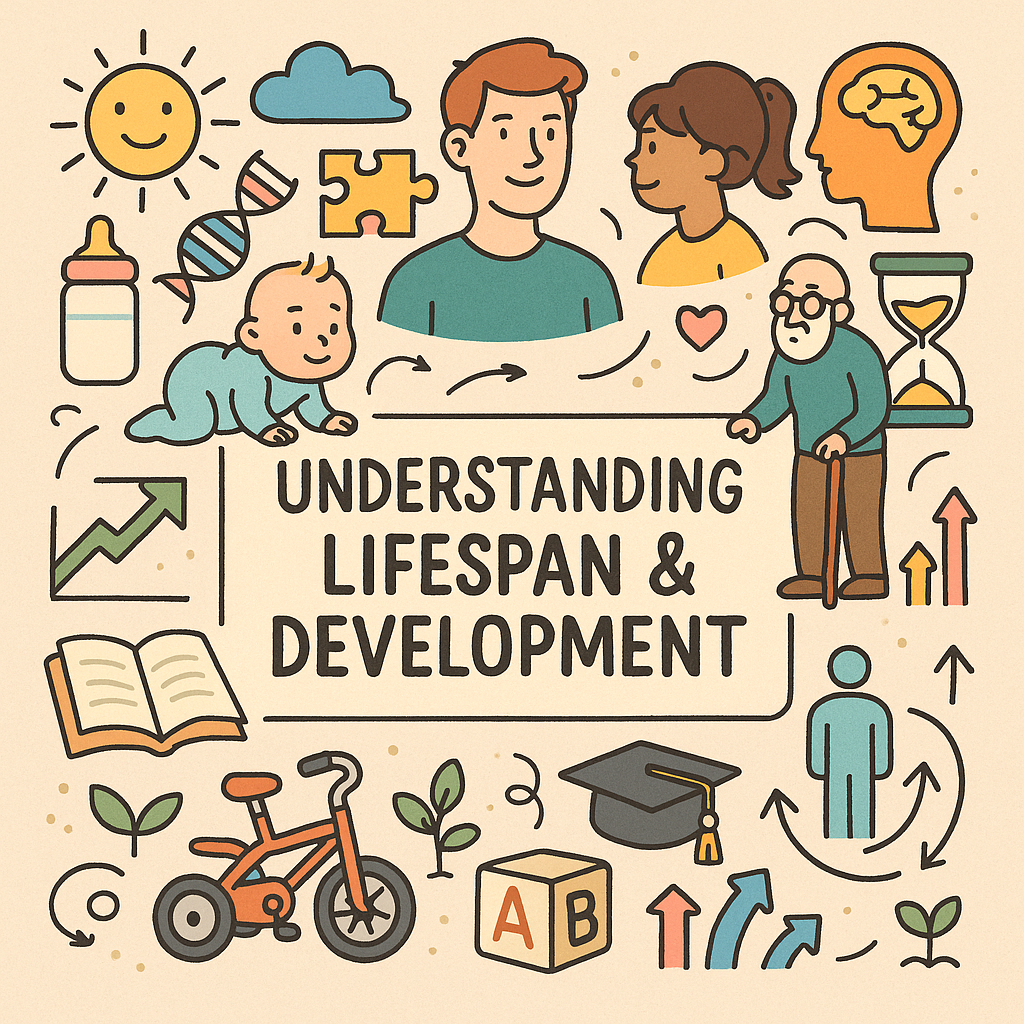
Understanding Lifespan Development: A Comprehensive Guide to Human Growth is an online, self-paced course that explores how people change from conception through older adulthood. You will examine physical, cognitive, social, and emotional development across life stages, and learn to connect theory with real-world situations—family, work, education, healthcare, and community life. By examining diverse examples from varied backgrounds, you’ll gain a balanced, evidence-based view of how biology, environment, culture, and life events shape developmental pathways. Do you ever wonder why early experiences matter so much, or how adults adapt to aging and life transitions? This course helps you answer these questions with clarity and practical insight.
Designed for a general adult audience, the program uses friendly, engaging language and relatable scenarios. You’ll encounter video lessons, interactive exercises, downloadable resources, and reflection prompts that you can complete on your own time. The goal is to build a solid, transferable understanding of lifespan development that you can apply to parenting, education, healthcare, workplaces, or personal growth.
Learning Objectives
- Describe key lifespan development theories (for example, Erikson, Piaget, Bronfenbrenner) and explain how they account for growth and change across life stages.
- Analyze how biological, cognitive, and socio-emotional changes interact from infancy to older adulthood, using real-world examples.
- Apply core concepts to assess everyday situations and case vignettes related to development, health, education, and family life.
- Evaluate research methods used in lifespan development and judge the credibility and relevance of evidence for varied populations.
- Reflect on personal development and identify strategies to support well-being and positive growth across the lifespan.
Prerequisites
No prior psychology or neuroscience coursework is required. The course assumes curiosity and readiness to engage with self-paced readings, reflective prompts, and practical activities. A basic comfort level with online learning tools (video playback, quizzes, downloadable worksheets) will help you succeed.
Course Structure
- Chapter 1: Introduction to Lifespan Development: Why It MattersWelcoming overview that frames lifespan development as a unifying lens for understanding growth from conception to older adulthood. You’ll learn how the field defines milestones, what questions drive research, and why insights from lifespan development matter in everyday decisions and public policy. Expect a course map, examples of common misconceptions, and a preview of how theory translates into practice.
- Chapter 2: Foundations of Lifespan Development: Theories and Core ConceptsExplores foundational theories (e.g., developmental stages, ecosystems, and cognitive development models) and how they guide the interpretation of change. You’ll examine the core concepts of stability, plasticity, continuity, and context, and learn to compare different theoretical lenses when analyzing a real-life scenario. Learners will identify the assumptions each theory makes about the role of biology, environment, and culture.
- Chapter 3: Prenatal to Infancy: Growth, Sensation, and Early LearningExamines prenatal development, birth, sensory experiences, reflexes, attachment, and the foundations of early learning. You’ll explore how genetics and early environment interact to shape later outcomes and how caregiver interactions influence temperament and social engagement. The chapter emphasizes milestone identification and early indicators of healthy development.
- Chapter 4: Toddlers and Preschoolers: Motor, Language, and Social FoundationsFocuses on rapid language development, motor skills, problem-solving, and early social relationships. You’ll study milestones, parenting styles, and classroom practices that support healthy exploration and autonomy. The chapter highlights common challenges and strategies to foster secure, curious learning environments.
- Chapter 5: Middle Childhood: Cognitive Development and Social SkillsInvestigates concrete operational thinking, school-based learning, self-regulation, peer influence, and moral development. You’ll learn how classroom contexts and family support shape motivation and skill acquisition. The chapter also considers equity issues and how diverse experiences influence development.
- Chapter 6: Adolescence: Identity, Brain, and Behavioral TransitionsExplores identity formation, autonomy, risk and resilience, and neurodevelopment during adolescence. You’ll examine social media, peer networks, executive function, and decision-making in the context of growing independence. Practical scenarios illustrate how to support positive risk-taking and healthy self-concept.
- Chapter 7: Emerging Adulthood: Exploration and Transition ChallengesAddresses the period of exploration and transition to adulthood, including education, work, relationships, and financial independence. You’ll discuss uncertainties, planning skills, and the role of social supports in fostering stable paths forward. The chapter emphasizes self-directed goal setting and adaptive planning.
- Chapter 8: Early Adulthood: Career, Relationships, and Well-BeingLooks at career development, intimate partnerships, family planning, and physical and mental health in early adulthood. You’ll analyze how decisions in work and relationships influence long-term trajectories and life satisfaction. The chapter highlights evidence-based strategies for balancing multiple life goals.
- Chapter 9: Middle Adulthood: Stability, Change, and Life RolesExamines peak career years, parenting patterns, caregiving responsibilities, and shifting health perceptions. You’ll explore how stress, work-life balance, and social supports impact well-being and performance. The chapter also discusses planning for retirement and continued personal growth.
- Chapter 10: Late Adulthood: Wisdom, Reflection, and AdjustmentConsiders aging experiences, cognitive changes, identity, meaning, and social connections in later life. You’ll examine adaptation to retirement, changes in daily routines, and intergenerational relationships. Practical insights emphasize continued learning and purposeful living.
- Chapter 11: Aging, Health, and Life CoursesFocuses on health trajectories, chronic conditions, functional abilities, and public health considerations across aging. You’ll explore how lifestyle choices, access to care, and social determinants shape aging experiences. The chapter links personal health management to broader life-course perspectives.
- Chapter 12: Developmental Theories Revisited: Integrating PerspectivesReviews major theories and teaches integration: when multiple perspectives illuminate a case more effectively than any one lens. You’ll practice comparing explanations, identifying limits, and proposing integrative interpretations for complex developmental stories. The emphasis is on flexible, evidence-based reasoning.
- Chapter 13: Genes, Environment, and Plasticity Across LifeDelves into gene-environment interactions, epigenetics, and lifelong plasticity. You’ll learn how biology and experience co-create development, and how to interpret research findings about genetic predispositions and environmental modifiers. The chapter highlights practical implications for health, education, and policy.
- Chapter 14: Cognitive Trajectories Across the LifespanExamines memory, attention, problem-solving, processing speed, and cognitive reserve across ages. You’ll analyze factors that support or challenge cognitive health and how lifelong learning activities influence resilience. The chapter provides frameworks for evaluating cognitive change in everyday life.
- Chapter 15: Social and Emotional Growth Across AgesExplores attachment, emotion regulation, social networks, and interpersonal development. You’ll consider how relationships evolve—from family to friends to intimate partnerships—and how social context affects well-being. Practical examples illustrate supportive communication and conflict resolution skills.
- Chapter 16: Language, Communication, and Cultural Contexts Over TimeInvestigates language development, communicative styles, literacy, and cross-cultural communication. You’ll learn how culture shapes meaning, how language abilities evolve, and how inclusive practices support diverse learners and communities. The chapter emphasizes practical communication strategies across ages and settings.
- Chapter 17: Diversity, Culture, and Lifespan DevelopmentAddresses diversity, bias, and inclusive research and practice. You’ll examine how cultural norms, immigration, race, gender, and socioeconomic status influence development. The chapter provides frameworks for culturally responsive assessment and intervention.
- Chapter 18: Life Transitions, Resilience, and CopingFocuses on major life transitions (birth, schooling changes, career shifts, parenthood, retirement) and how people cope with change. You’ll explore resilience factors, coping strategies, and resource use in diverse contexts. The chapter includes practical guidance for supporting adaptive transitions.
- Chapter 19: Research Methods and Applied Practice in Lifespan DevelopmentIntroduces study designs, measurement concepts, ethics, and interpretation of lifespan research. You’ll learn to translate findings into practical applications for education, healthcare, and policy. The chapter emphasizes critical thinking and applying evidence to real-world cases.
- Chapter 20: Conclusion and Real-World ApplicationsOffers a comprehensive synthesis of key concepts and lessons, with real-world applications across careers and daily life. You’ll review core theories, reflect on personal growth, and plan next steps for continued learning or professional development. The final chapter celebrates progress and provides pathways for ongoing inquiry and skill-building.
Learning Delivery Methods
The course is delivered entirely online and asynchronously. Expect modular video lessons that explain concepts clearly, short interactive activities to reinforce learning, and printable resources you can download for offline study. You’ll also encounter practice quizzes, reflective prompts, and scenario-based exercises that let you apply what you’ve learned at your own pace. Each module uses a mix of visuals, accessible language, and real-world examples to help you connect theory to everyday life.
Assessment & Practice
Assessment is designed to be self-paced and progressively challenging. You’ll complete automated quizzes after each chapter to test understanding, engage in self-check exercises to reinforce key concepts, and download worksheets to organize notes and insights. Practical assignments draw on case vignettes and real-life scenarios, while reflection prompts help you internalize learning and link it to your personal and professional contexts. Your progress will be tracked as you advance through the modules.
Expected Outcomes
By the end, learners can describe core lifespan development theories and milestones across life stages; analyze how biological, cognitive, and socio-emotional changes interact over time; apply concepts to interpret real-world situations in parenting, education, healthcare, and policy; evaluate the credibility of lifespan research and its relevance to diverse populations; and reflect on personal development to identify strategies that support healthy growth across the lifespan. By the end, learners can demonstrate independent, evidence-based reasoning about human growth and apply it to informed decision-making in everyday life.



Reviews
There are no reviews yet.